
BI Teams & Data Engineers
Design and deploy data warehouses faster and more efficiently.
An innovative tool for collaborative data warehouse design and modeling. Centralized construction and maintenance of the DataMart layer. Visual modeling, automatic generation of models and DDL scripts, and business logic documentation.
DataForge integrates AI agents and the MCP Server to significantly expand the platform’s capabilities. These components automate the creation of the KPI & Measurement Registry, transform existing DWH structures into a fully defined semantic layer, and enable secure, governed access for AI models to both data and metadata.


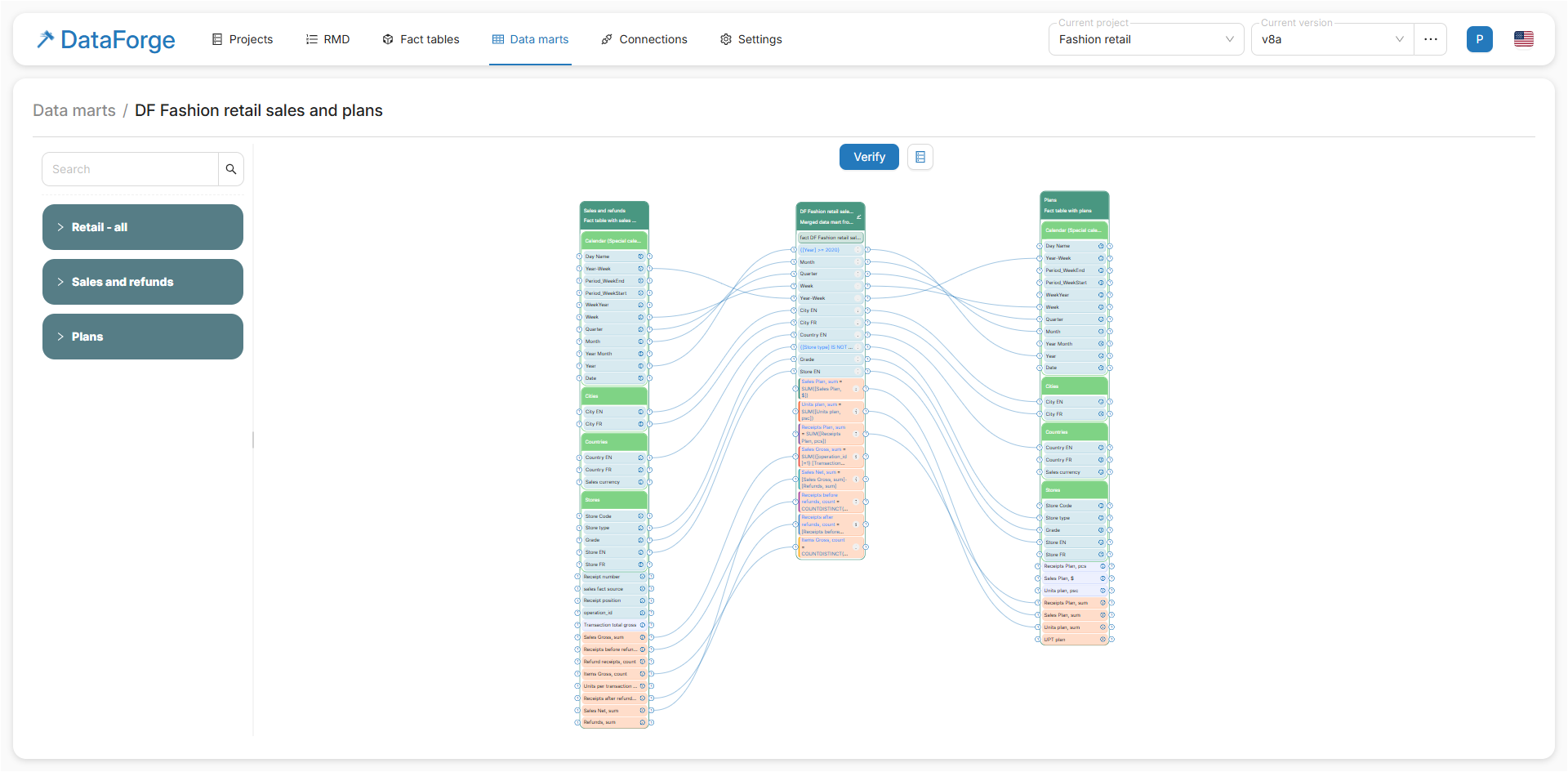
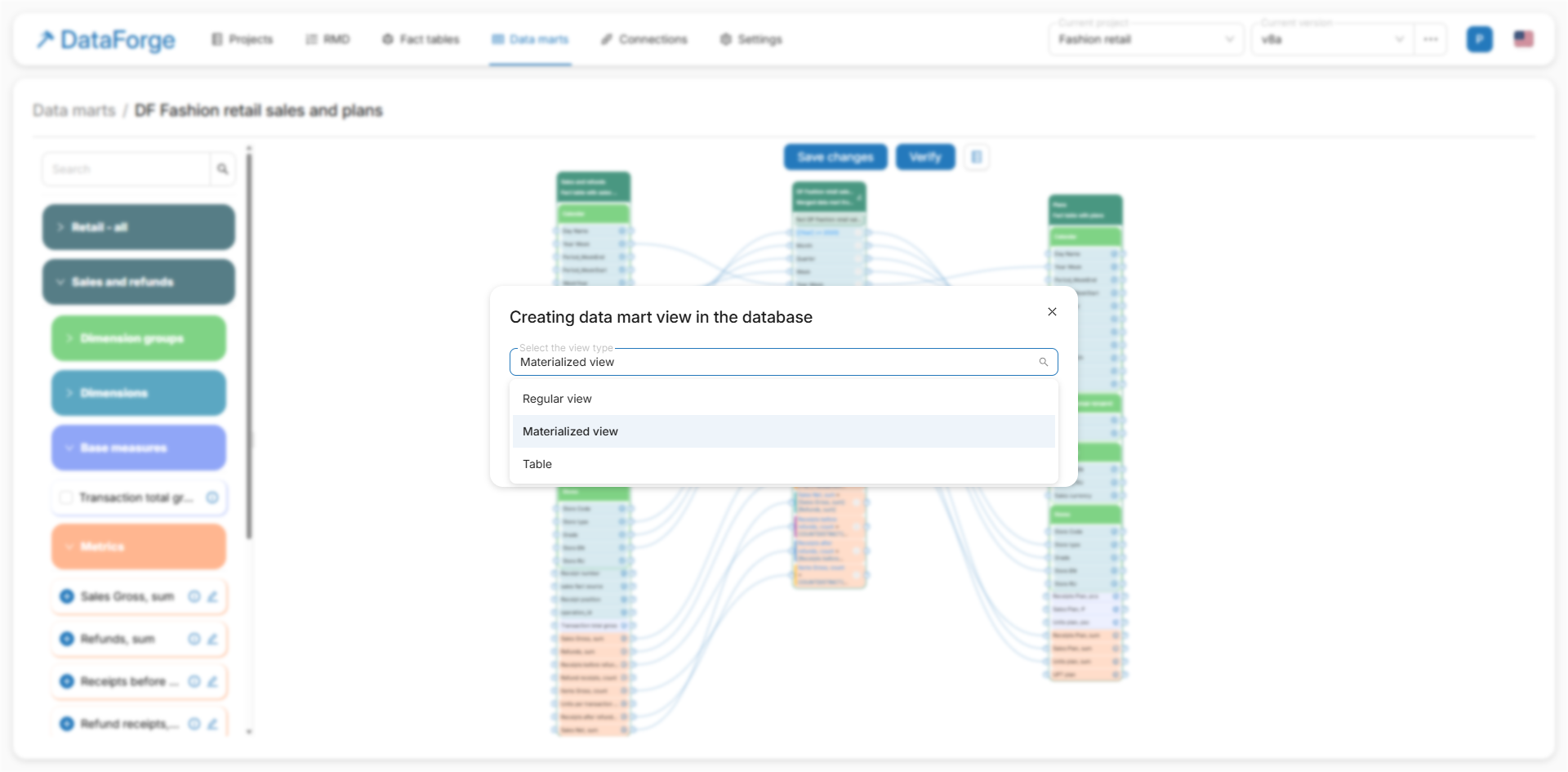
DataForge is an innovative platform for collaborative design and visual modeling of enterprise-grade data warehouses (DWH). It enables centralized development and maintenance of the DataMart layer with visual modeling, automatic generation of models and DDL scripts, and comprehensive documentation of business logic.
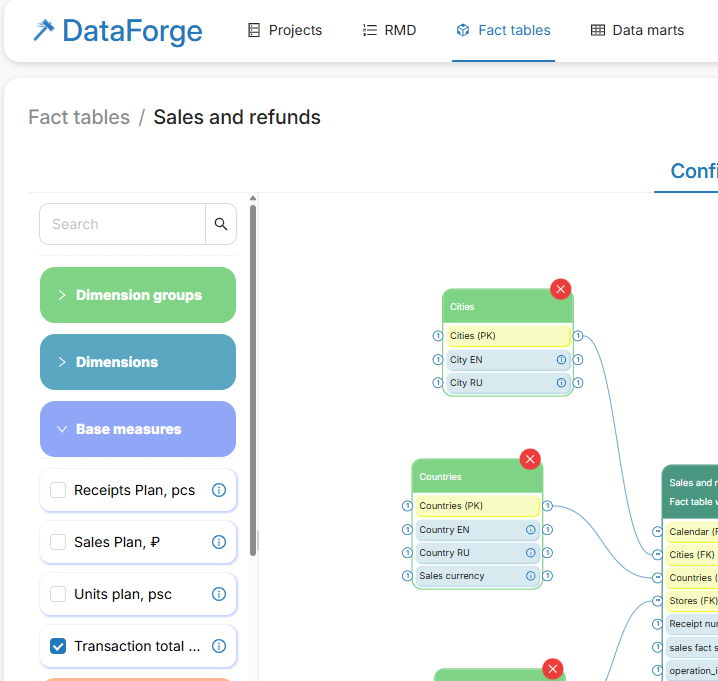
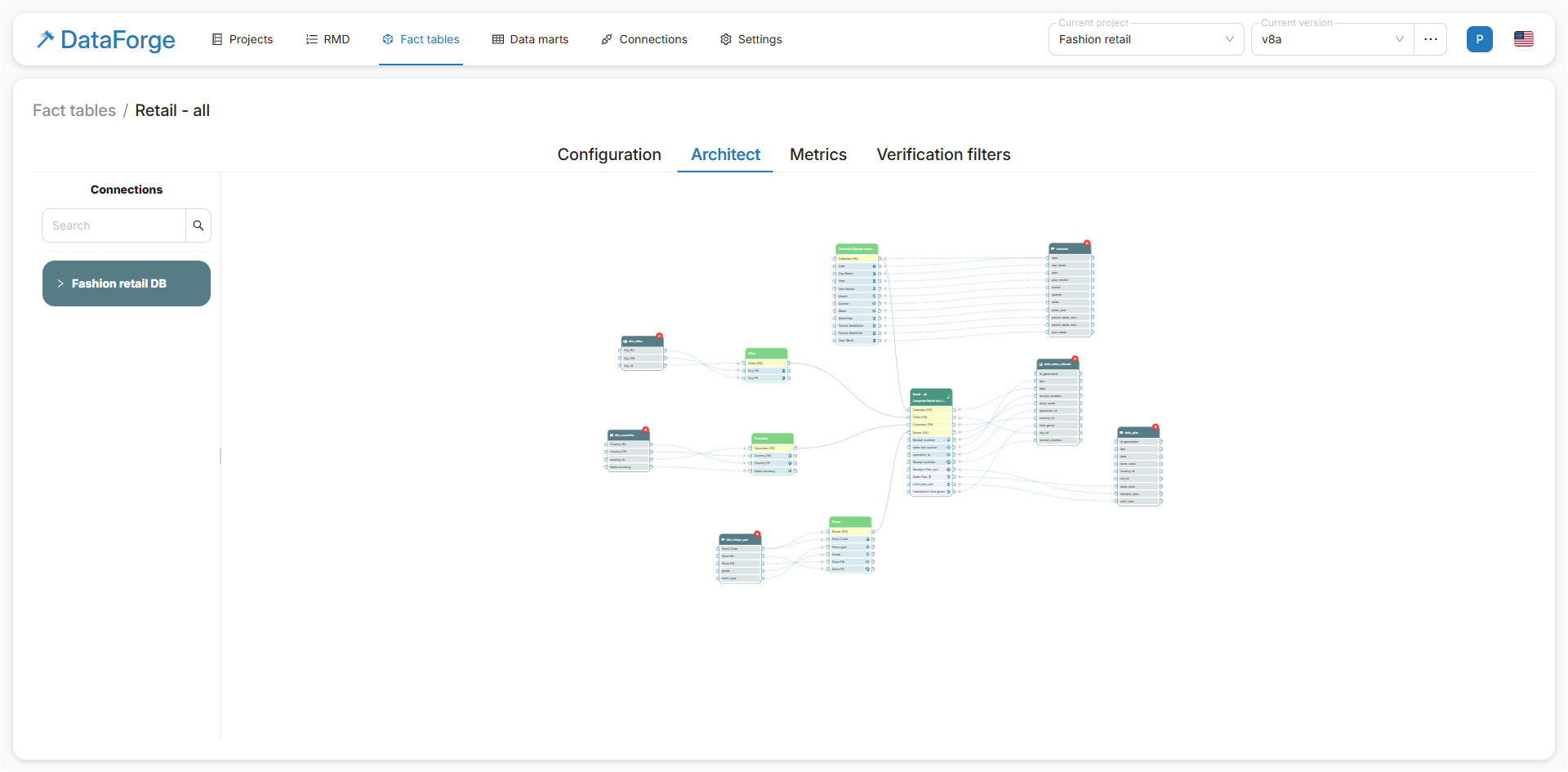
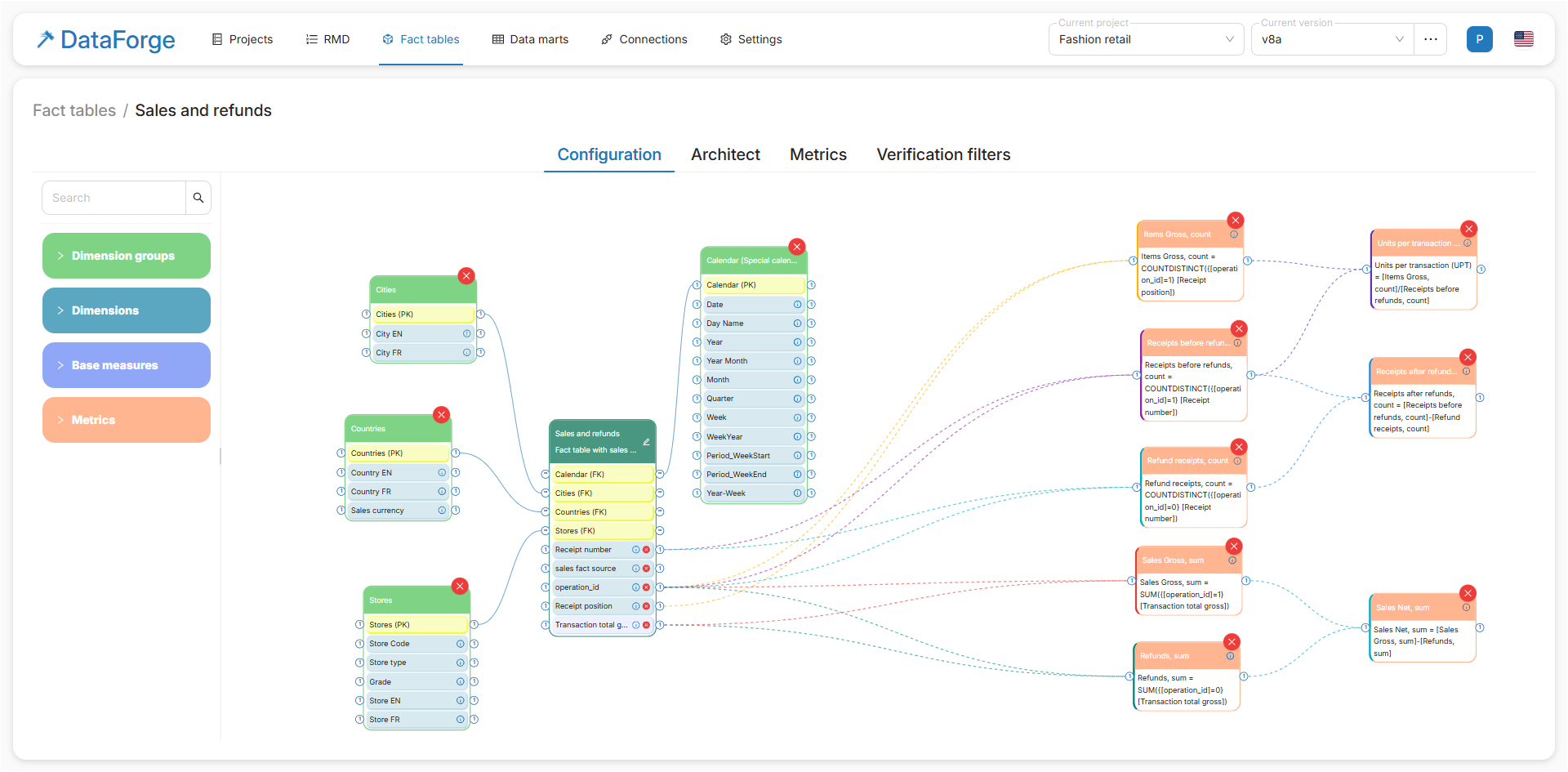
You can visually design fact tables with drag-and-drop tools, automatically generate logical and physical data models, document metrics and attribute definitions, and export ready-to-run DDL scripts for relational databases.
With built-in AI agents and the MCP Server, DataForge evolves from a traditional data-modeling tool into a complete, intelligent analytics platform. AI can automatically generate KPI registries, answer business questions, build SQL queries, and create HTML dashboards - all using the semantic layer and Data Mart data. DataForge brings together data modeling, semantic governance, and AI-driven analytics into a single, cohesive solution, accelerating the delivery of insights across the enterprise.





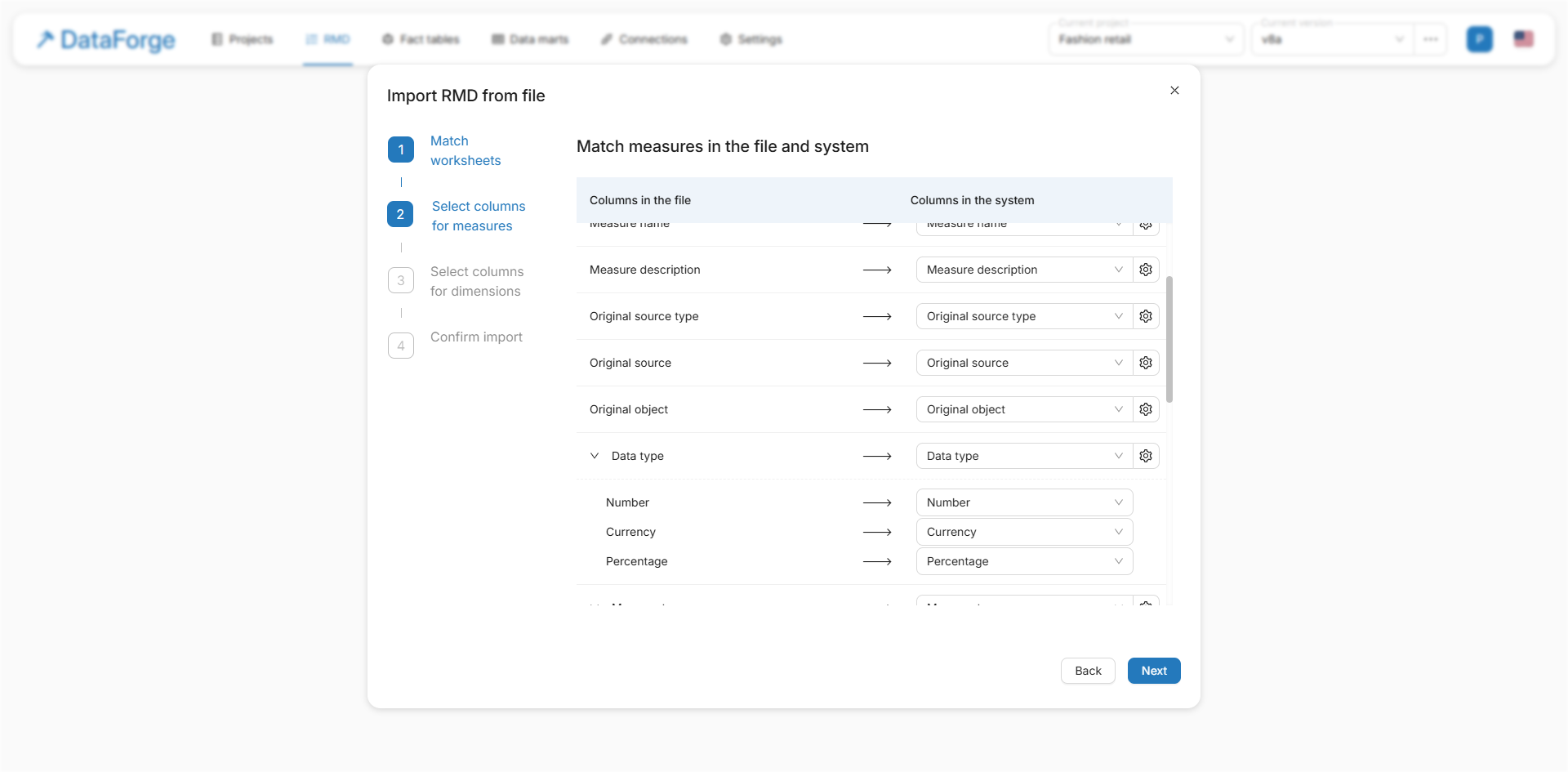
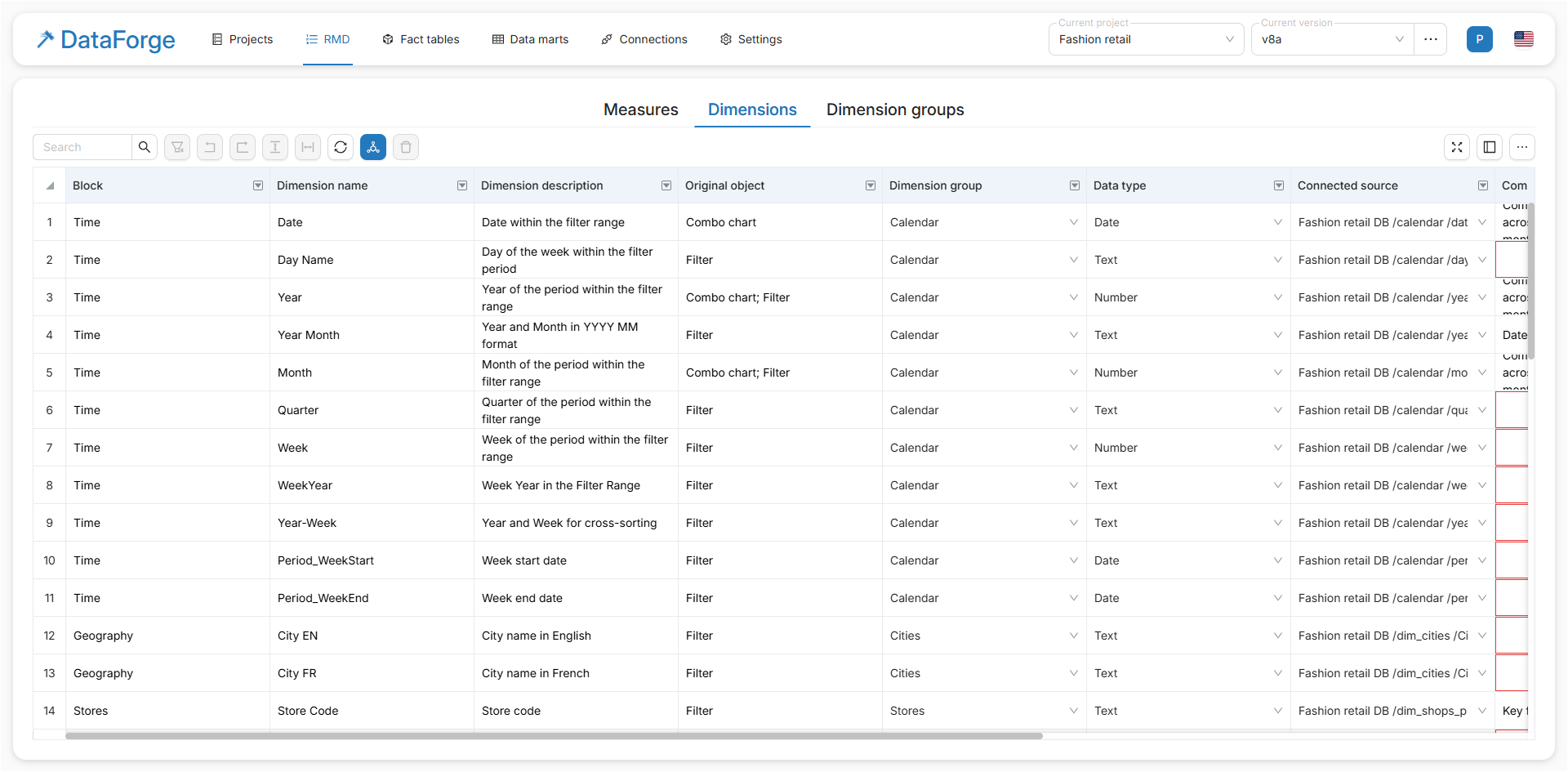
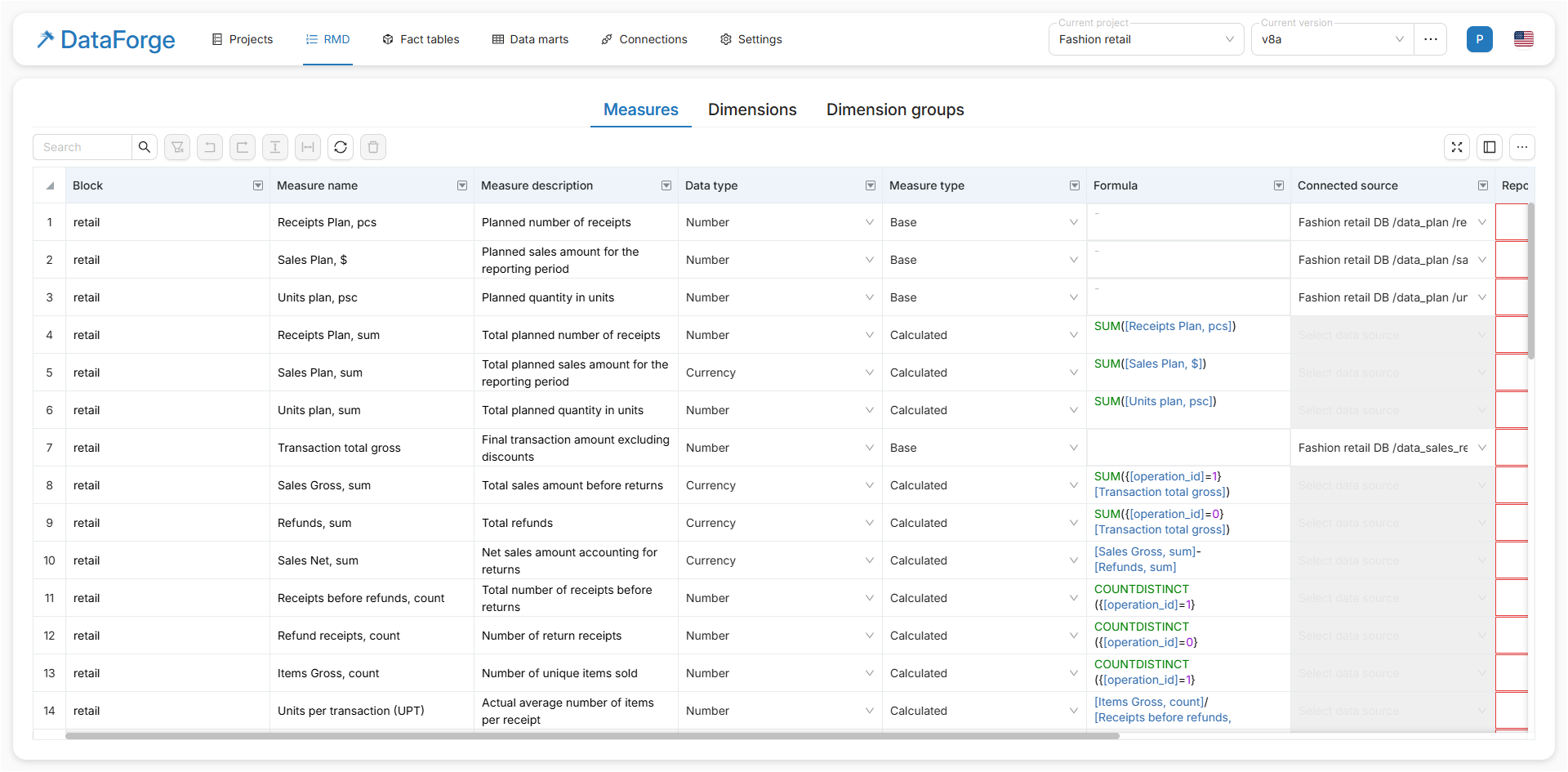
This AI agent automatically generates a KPI & Dimension Registry based on existing technical artifacts, including database DDL scripts. The algorithm analyzes table structures, data types, relationships, and keys, extracting schema names, tables, and data sources while classifying attributes into “KPI” and “Dimension” categories. Using contextual analysis, the agent is able not only to understand the structure, but also to interpret the meaning of the data, automatically generating clear and business-friendly descriptions.
The MCP Server acts as a universal integration layer between enterprise data enriched with metadata from DataForge and Large Language Models (LLMs) that use this data for analytics, data mart generation, model creation, and reporting. MCP provides secure and standardized access to the semantic layer, data structures, and DWH repositories, creating a unified interaction point between the data infrastructure and AI agents.
GitHub →An AI agent for conversational interaction with enterprise data. The user asks a business question in natural language, and the agent independently determines which data is required, accesses the DataForge semantic layer through the MCP Gateway, explores the database structure when necessary, generates SQL queries, validates the results, and returns a ready-to-use analytical answer. The agent can explain KPIs, build tables and charts, identify anomalies, compare periods, detect leaders and outliers, generate concise conclusions, and suggest follow-up questions to continue the analysis.

Design and deploy data warehouses faster and more efficiently.

Maintain consistent, scalable data models across projects and departments.

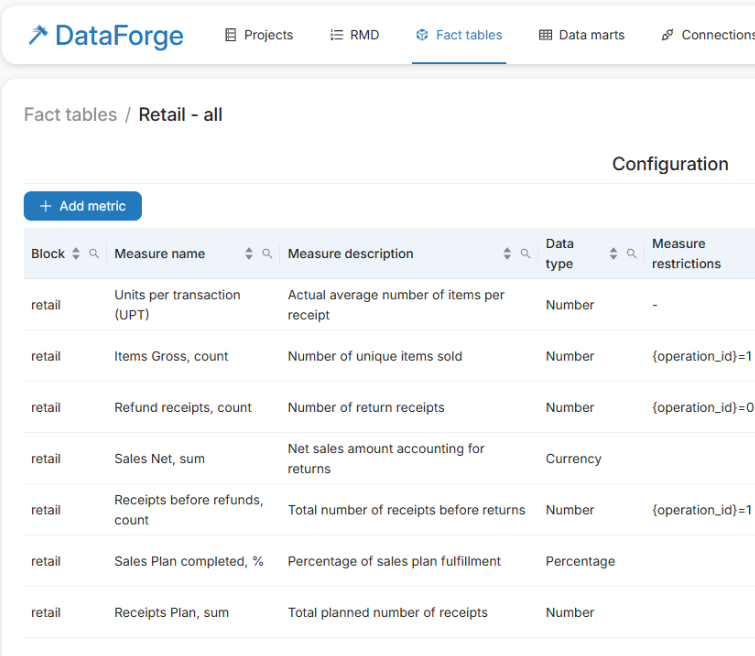
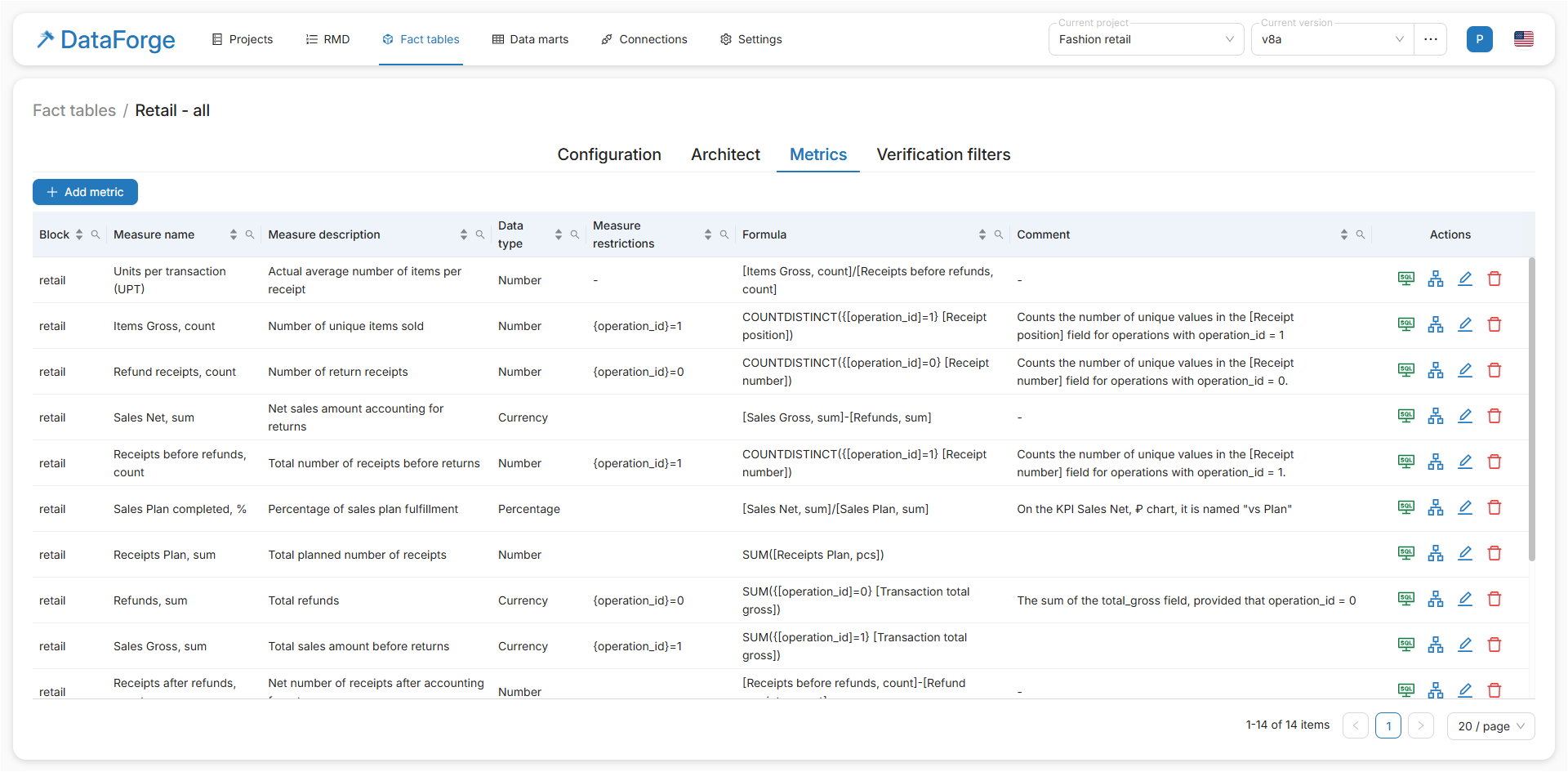
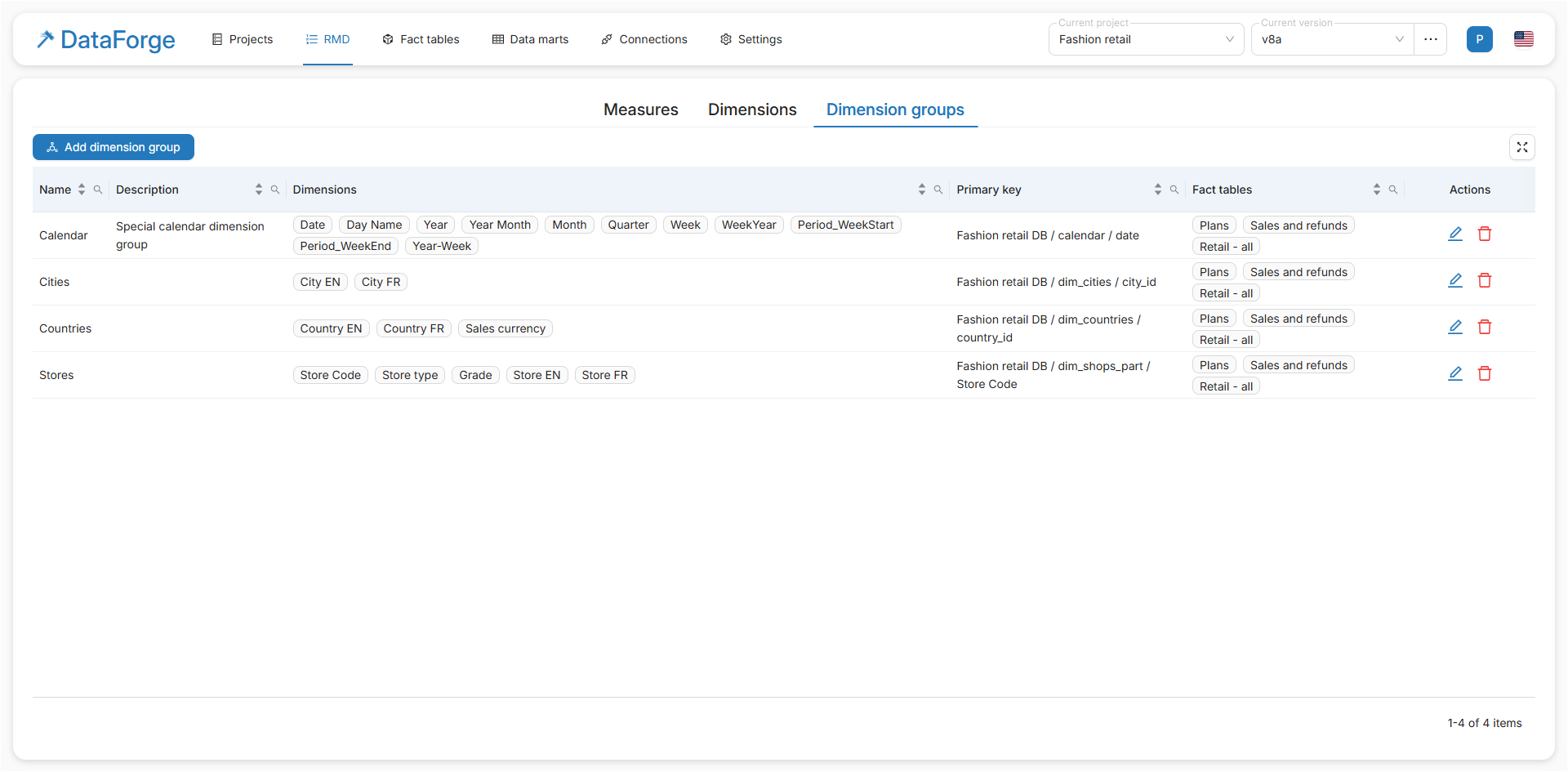
Define key metrics and dimensions for analytics — without technical barriers.
A centralized KPI and Dimension Registry helps organizations manage business logic, accelerate data mart development, and reduce inconsistencies across enterprise reporting.
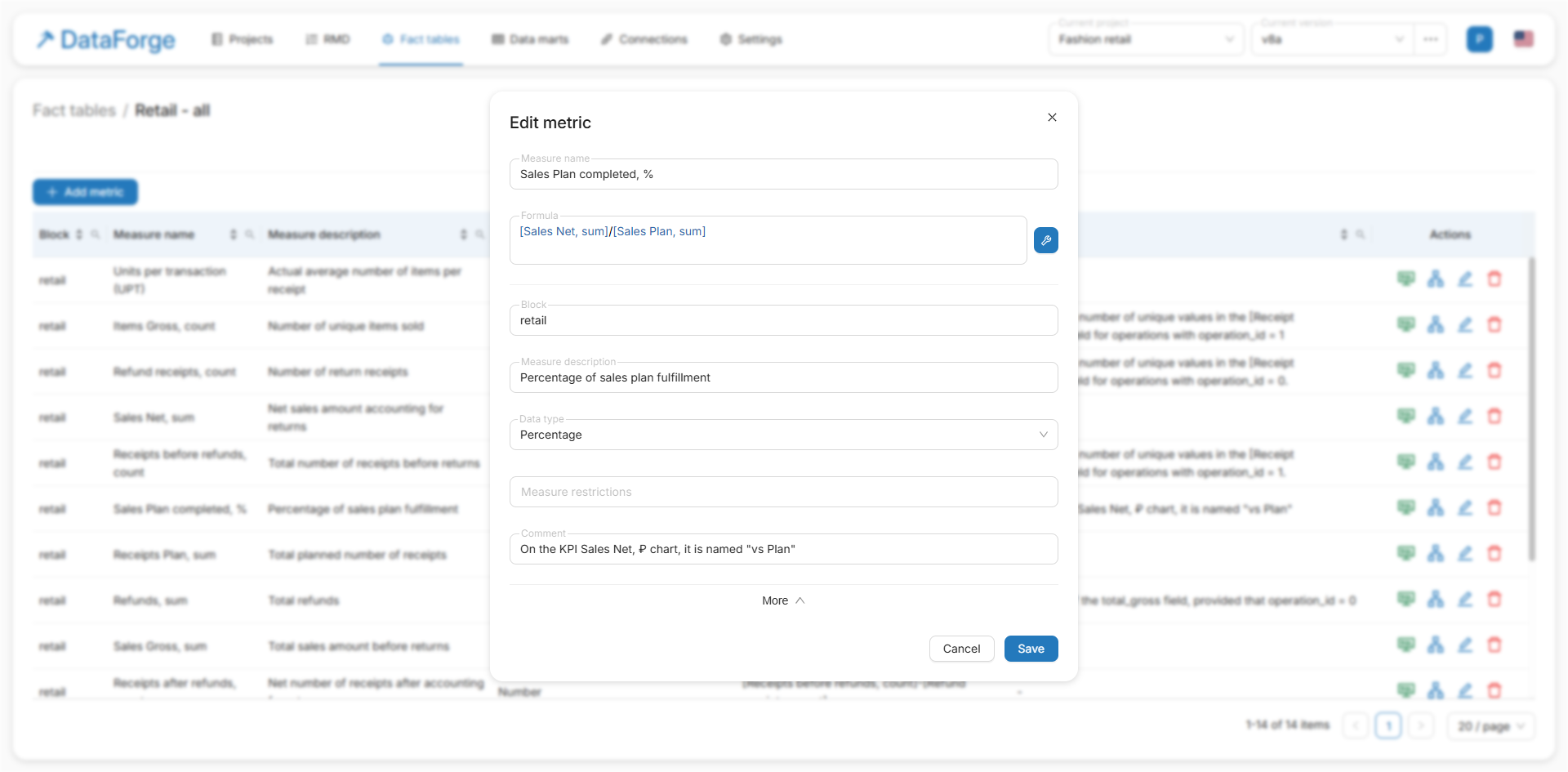
KPIs and metrics are defined once and reused across data marts, reports, dashboards, and BI platforms.
KPIs and dimensions can be modified through registry configuration without rewriting SQL queries, ETL pipelines, or reporting logic.
Business users and developers work with a shared set of KPI definitions, dimensions, and business metrics.
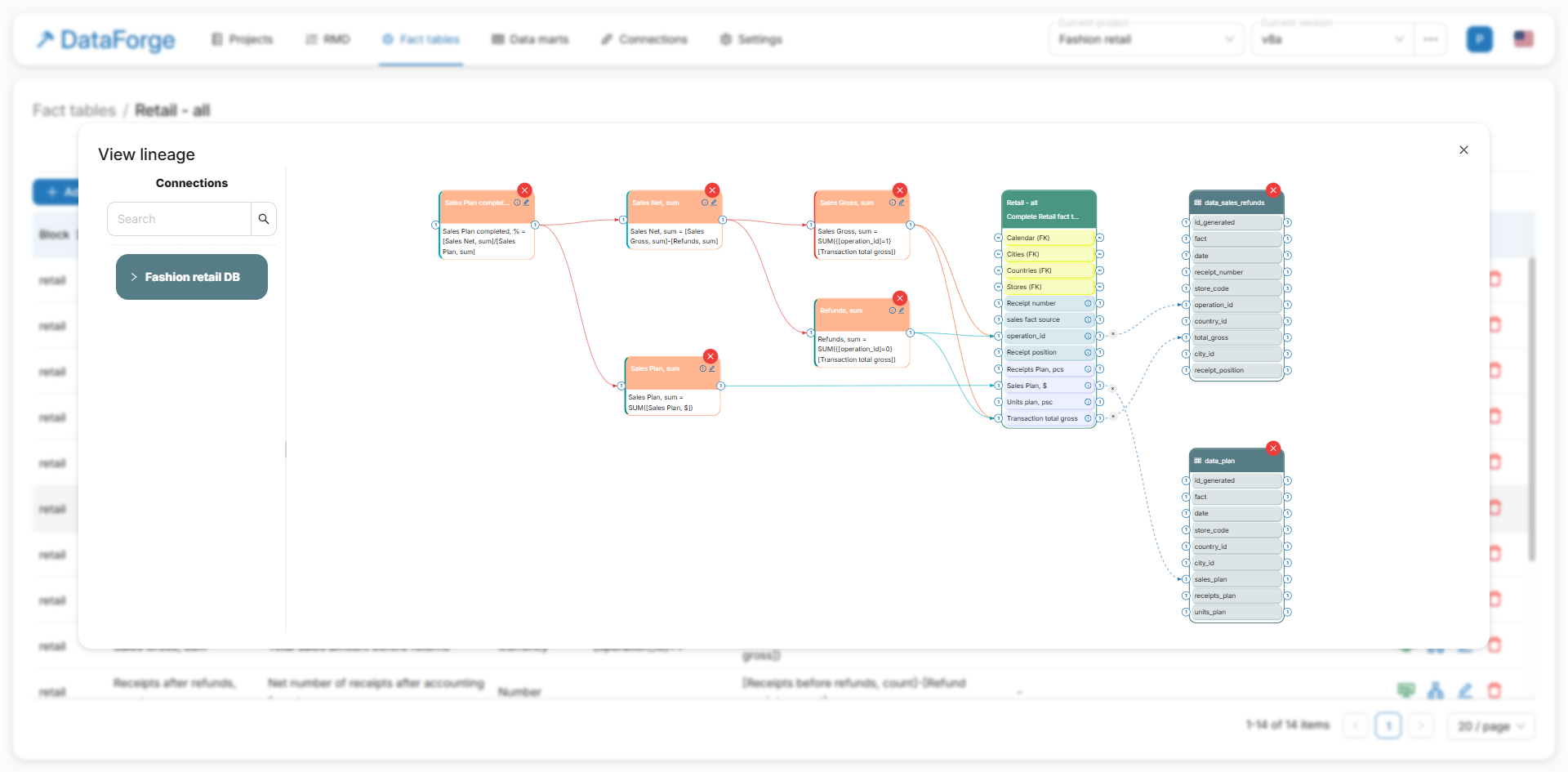
Anomalies, inconsistencies, and potential issues can be detected before they impact reports and business decisions.
Analysts and external teams consume ready-to-use metrics instead of manually recreating business logic in every report.
A machine-readable layer of metrics and calculation rules enables AI agents to generate responses based on accurate data and consistent business logic.
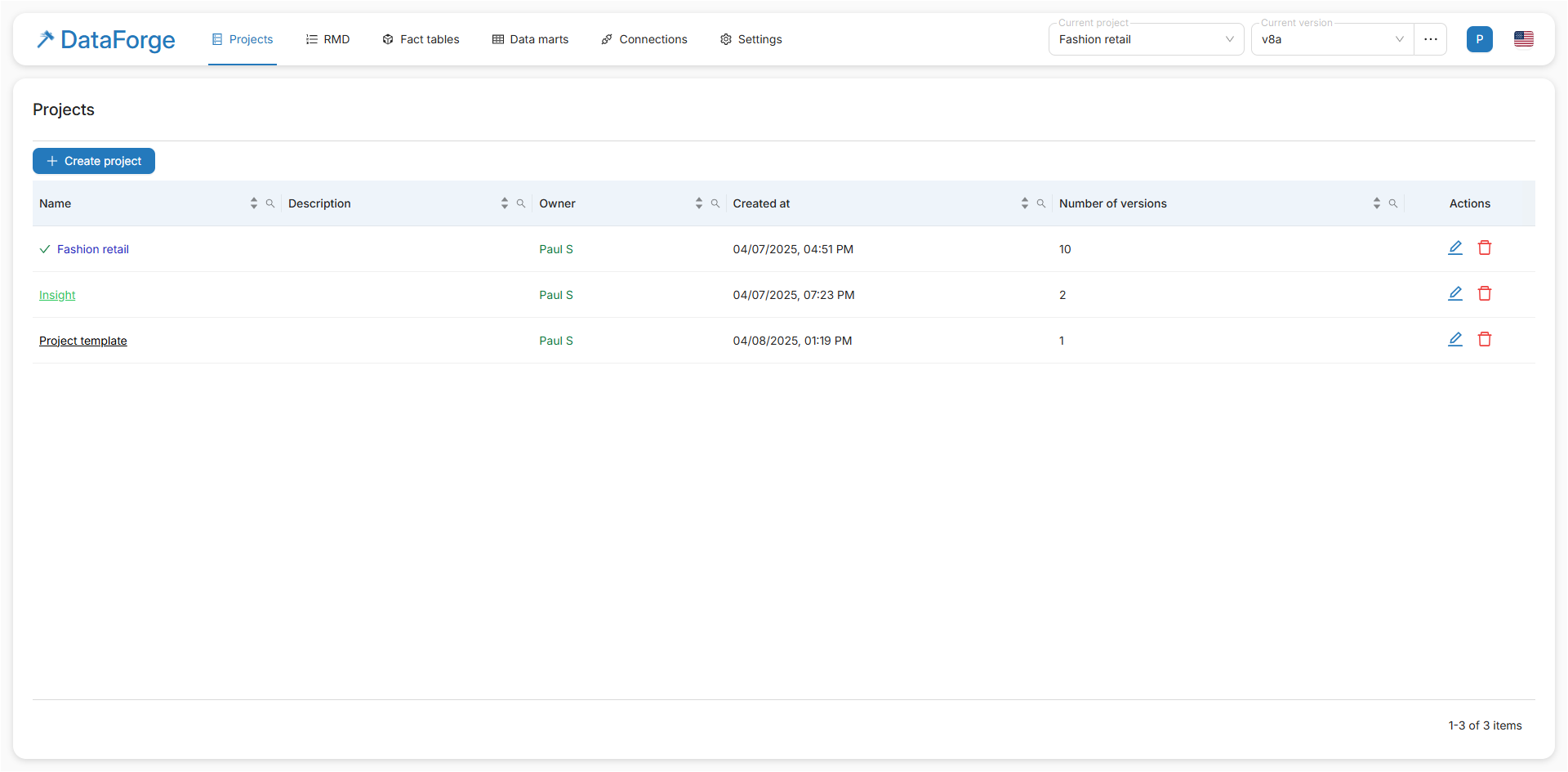
DataForge is distributed under an annual subscription model. A free trial with limited functionality is available for evaluation purposes.
Available license types:
Enterprise deployment terms are calculated individually.
For evaluating the platform
Limited functionality
For platform configuration and maintenance
For business users
Working with ready-to-use analytics
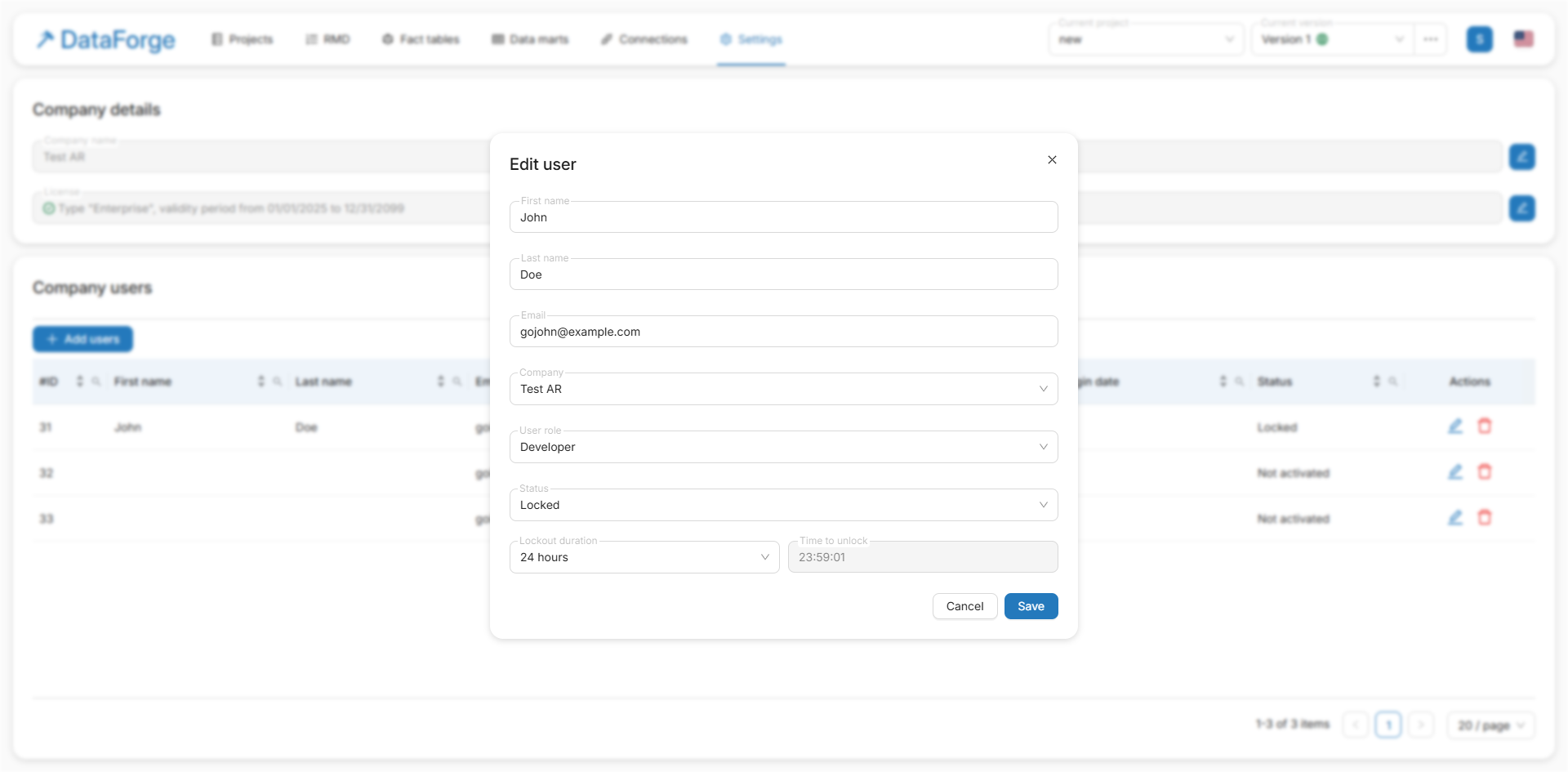
| License Features | Analyst | Developer |
|---|---|---|
| View projects | ✓ | ✓ |
| Generate and view SQL scripts | ✓ | ✓ |
| Create projects | ✓ | ✓ |
| Edit own projects | ✓ | ✓ |
| Edit other users’ projects | — | ✓ |
| Work with RMD | ✓ | ✓ |
| Work with fact tables | ✓ | ✓ |
| Run SQL scripts for fact tables | ✓ | ✓ |
| Work with data marts | — | ✓ |
| Run SQL scripts for data marts | — | ✓ |
| User management | — | — |
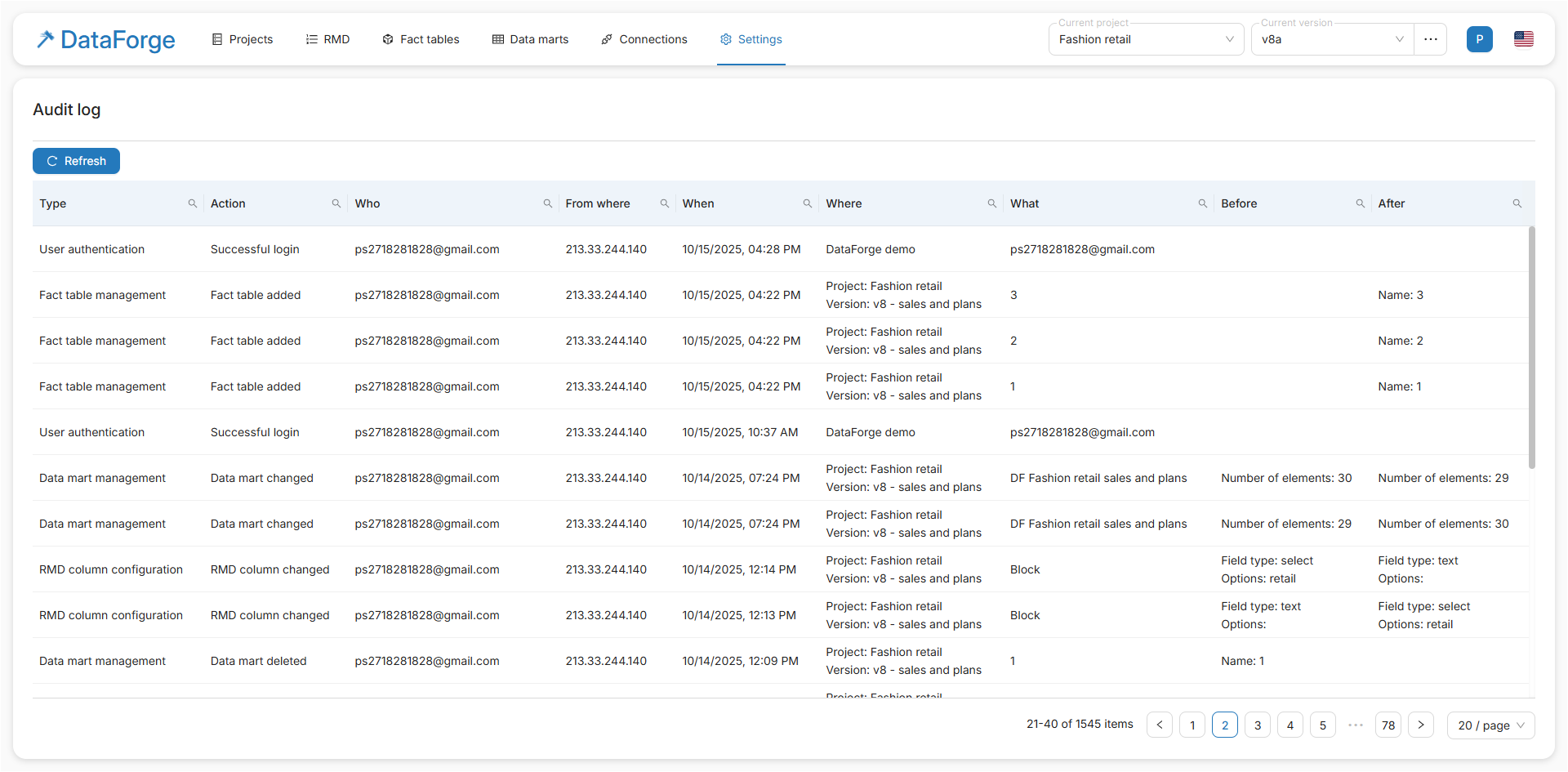
| View system logs | — | — |
Document your key business indicators, dimensions, and relationships.
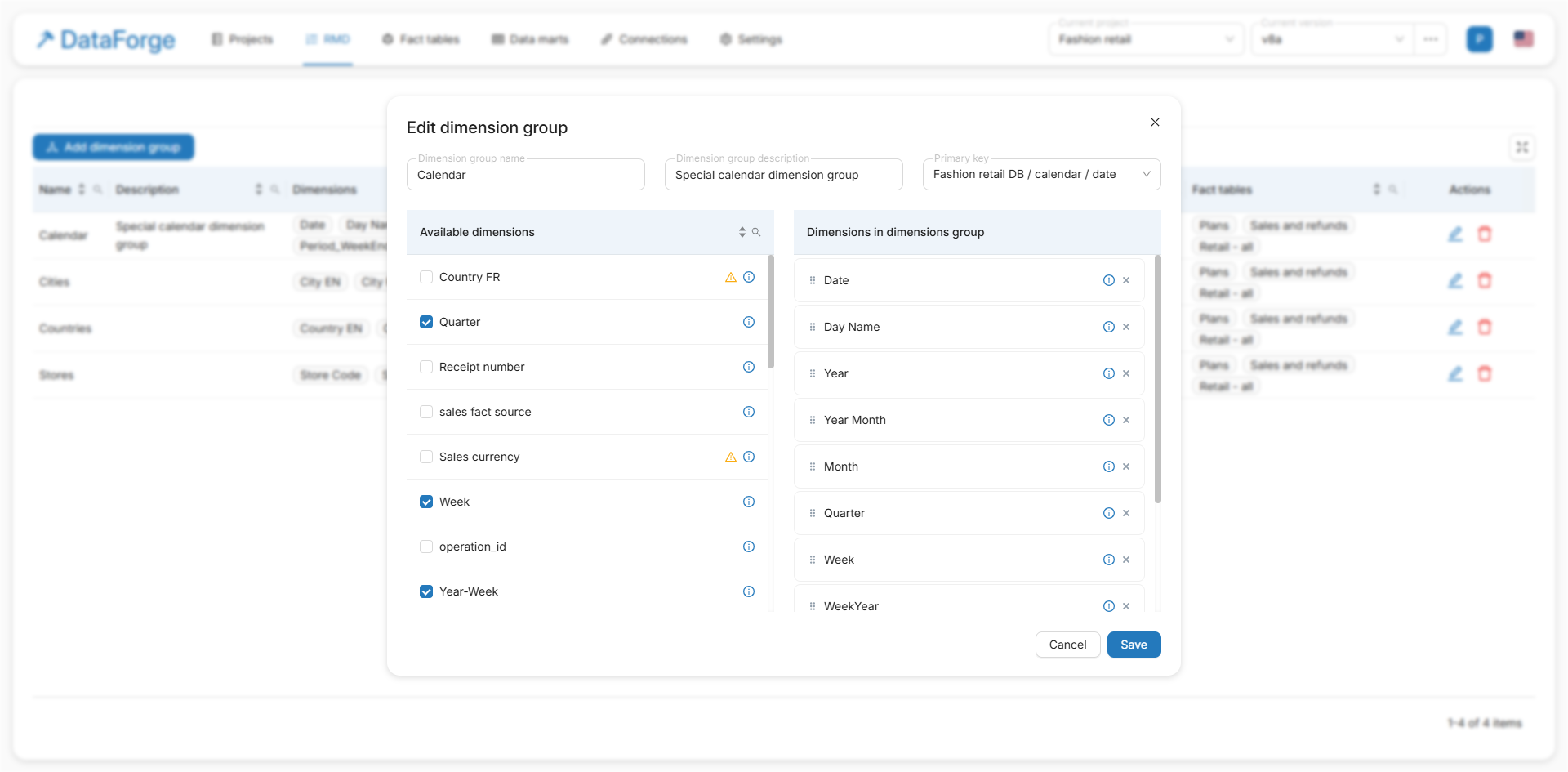
Use intuitive drag-and-drop tools to design fact and dimension tables.
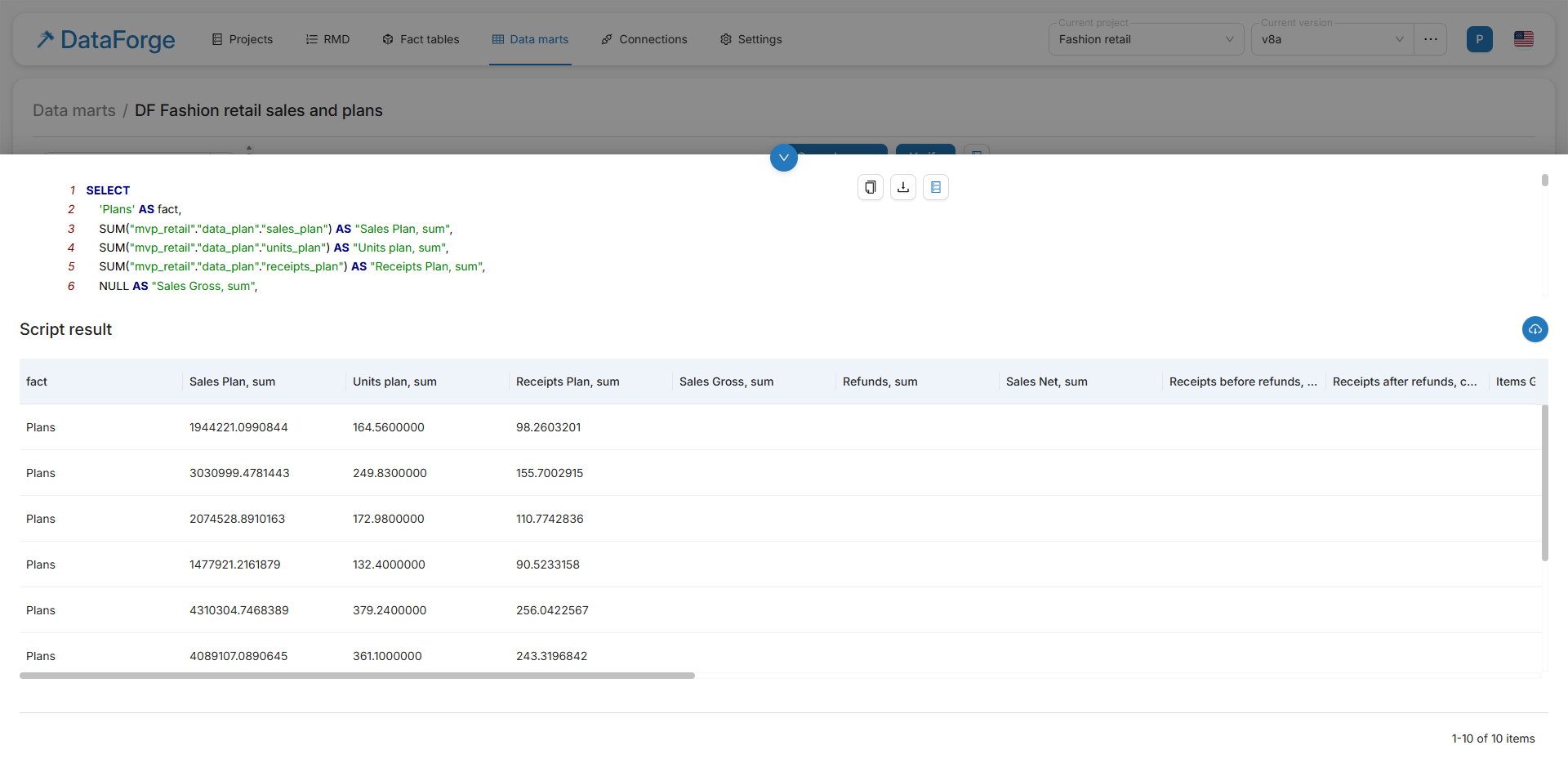
Export automatically generated SQL scripts for seamless implementation.
Keep business requirements, data models, and databases perfectly aligned.



433 Plaza Real Suite 275
Boca Raton
FL 33432

DataForge is a system for visual modeling and designing the structure of data warehouses (DWH). It allows users to visually design fact tables using drag-and-drop, automatically generate physical and logical data models, document business logic and attribute definitions, and generate DDL scripts to create a physical model in a relational database.
Copyright © Dataforg. All rights reserved.